

With online shopping at all-time high, ‘buy now, pay later’ (BNPL) options are becoming increasingly popular. BNPL is an option that enables customers to delay paying for goods or allows them to pay in instalments. The service typically bears interest which consumers have to pay. It differs from hire purchase because with BNPL, the customer owns the goods on purchase, it is just that the due date for payment for the goods is delayed. This seemingly easy way to get credit is now, for better or worse, subject to regulation in the UK. Continue Reading
 Monday’s announcement of the institution of a section 337 investigation of
  This blog is a follow-up to our recent blogs on HMRC’s controversial
  US company Celgard, LLC has secured an interim injunction against its rival, Chinese company Shenzhen Senior Technology Material Co Ltd (“Senior”), that prevents Senior from importing or supplying its battery accessory products into the UK. The Court found there was a likelihood that Senior had misused Celgard’s confidential information and trade secrets, and that the UK was the most appropriate forum to try the dispute. This is the first injunction under the relatively new UK Trade Secrets Regulations 2018 based on the EU Trade Secrets Directive. The judgment, which has now been confirmed on appeal to the Court of Appeal, contains a number of helpful clarifications on the approach that the UK courts will take to the protection of confidential information, particularly on a cross-border basis.
  The 2020 pandemic and related restrictions on retail businesses led consumers redirecting their purchasing and spending to online sales. For example, in the EU and UK, online sales reportedly grew by 30-40% after lockdown restrictions were introduced in March last year. This trend has shone a light on certain online sale practices that raise concerns for competition and consumer protection authorities, namely, geo-blocking, resale price maintenance, price gauging and the use of pricing algorithms, among others.
 In his continued blog series,
 In the first of a new blog series,
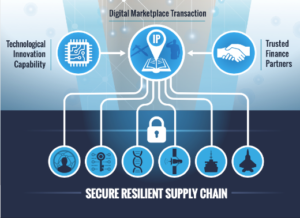 On January 13, 2021, the Department of Defense (DoD) announced the launch of its Trusted Capital Digital Marketplace (TCDM) to support qualified small and medium sized businesses (“Domestic Companies”) that make up the defense industrial base (DIB). The TCDM establishes a forum to provide selected innovative domestic companies with access to “vetted” sources of private capital in the form of loans, loan guarantees, incentives, and investments to enhance the capability of the DIB to serve our defense and national security needs.
 On December 30, 2020, after seven long years of negotiations, China and the EU concluded in principle the negotiations for a Comprehensive Agreement on Investment (CAI). The frayed political and trade relations with the US, as well as Brexit, convinced the EU members to put aside objections related to human rights violations and close the deal with China, now their major trade partner. The Chinese, hard pressed to offset the 2020 diplomatic set-backs, including the mishandling of the initial Covid-19 crisis, the Xingjian labor camps issue, and the Hong Kong crisis, and in need of alternatives to their strained relations with the US, were willing to make concessions — including some key provisions concerning China’s forced technology transfer.
 After a slow but steady start to 2020, the U.S. International Trade Commission (ITC) saw a flurry of new complaints filed in the second half of the year. Eight new complaints were filed in December, resulting in a total of 57 complaints filed in 2020. As discussed in previous posts (e.g.