The authors wish to thank Jonathan Mason for his contributions to this post.
In early March, the darts phenomenon and reigning World Champion, Luke Littler, applied to the UK Intellectual Property Office (“IPO”) to register his face as a trade mark in the UK across a variety of different categories from the obvious (class 9 which includes computer and video games) to the more niche (class 11 being “lights for dartboards and dartboard cabinets”) joining a growing list of celebrities in the UK and further afield seeking to use trade mark law to protect their likeness in the generative AI era.
What can be registered as a trade mark?
In the UK, the Trade Marks Act 1994 (“TMA”) defines a trade mark as “any sign” which is: (a) capable of clear and precise representation to allow outsiders to clearly understand what is being protected; and (b) distinguishes the goods or services of the owner from those of third parties.
Given this statutory reference to a “sign”, when asked to name a trade mark, most people will immediately think of a well-known brand name, logo or slogan. However, as the TMA makes clear, a “sign” (and thus a trade mark) is not limited only to words or phrases and more nebulous items such as sounds, smells, colours and shapes are all capable of being registered as a trade mark, provided that the requirements for clear and precise representation and distinctiveness are both met. For example, in addition to seeing the word “Netflix” the public are increasingly familiar with the “tedum” sound that accompanies the logo.
What about a face?
Given the requirement for trade marks to be distinctive/capable of distinguishing the owner’s goods or services from those of a third party, historically, successful trade mark applications for a face in the UK and other jurisdictions have been limited to clearly stylised representations, such as the familiar KFC “Colonel Saunders” logo – as opposed to more general/generic representations.
However, as generative AI has developed and alongside it the risk of unauthorised use of a person’s image has increased, a growing number of celebrities are seeking trade mark registration for facial images which might reasonably be considered more general/generic, as opposed to stylised. This trend is particularly apparent in jurisdictions, such as the UK, which do not offer a standalone image or personality right and where the position regarding copyright law and AI is evolving [UK Government Consultation on Copyright and Artificial Intelligence: The Sound of a Can being Kicked Down the Road? | Global IP & Technology Law Blog]. The famous (and not so famous) are therefore increasingly looking for registered intellectual property rights to defend against the use of their persona without consent. In this regard, trade mark protection may indeed offer a powerful tool in the AI era. Readers familiar with the high-profile case last year of Getty Images v Stability AI case may recall that the one part of Getty’s infringement claim where it was able to secure a partial victory was in respect of trade mark infringement [Getty Images (US) Inc (and others) v Stability AI Limited. Input: Getty Images v Stability AI. Output: Continued Uncertainty. | Global IP & Technology Law Blog].
The assessment process
When assessing any application to register a facial trade mark the IPO will apply the same criteria as for any other application.
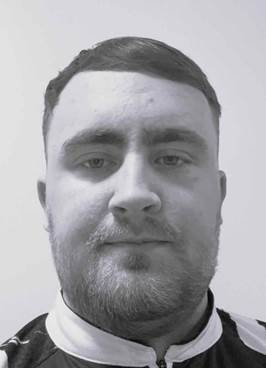
Typically, the requirement for clear and precise representation of what is being registered as a trade mark is easily met, usually in the form of a photograph showing a direct, photorealistic likeness of the celebrity in question, as has been provided as part of Littler’s application:
Similarly, for a celebrity who is active in the brand endorsement field, there is usually evidence that their face is being used to distinguish the goods or services which they promote from those of third parties. In the case of Littler, examples include the range of KP Nuts launched in October 2025 featuring a clear photograph of his face on the packaging, a brand endorsement deal with Xbox that makes extensive use of his face/image and a range of darts in partnership with Target Darts, many of which again feature a clear photograph of his face on the packaging.
As such, the test usually comes down to whether the celebrity in question has sufficient public profile to catapult their face from the category of a general/generic image of a face, into that of being sufficiently distinctive/distinguishing to have clearly become their faceand their face alone.
There is precedent for the IPO deciding that a general/generic photorealistic likeness of a sports-person has meet this distinctive/distinguishing test, having accepted in November 2025 a trade mark application made by the footballer, Cole Palmer, to register an image of his face similar in style/form across a variety of categories.
Similarly, Jeremy Clarkson was successful earlier this year in securing a trade mark registration for an image of his face, reportedly as part of measures to prevent unauthorised use of his image to promote bitcoin and other financial schemes on social media.
Littler arguably will fall into this category too, given his multiple appearances at high-profile sports events, awards and TV shows alongside a significant profile on both traditional and social media, which have made him well-known and easily recognisable to a large section of the public. However, as applications and successful registrations increase, we may start to see that one of the badges of “A” or “B” list celebrity status is having a facial trade mark registered leading to some potentially difficult conversations with celebrities in categories towards the end of the alphabet that their face simply doesn’t have (or no longer has) the level of public recognition for the IPO to accept that it has become sufficiently distinctive/distinguishing to qualify for, or to maintain, a registration for a facial trade mark.
Similarly, it will be interesting to see to what extent owners of a facial trade mark registered at the start of their careers will seek to maintain and defend that trade mark in its original (youthful) form as the years go by or whether a new trend will soon start to develop of celebrities regularly applying for new trade mark to take account of the passage of time and/or significant image changes.