
The Federal Circuit recently issued a precedential decision not only reiterating that mere data collection is abstract under 35 U.S.C. § 101, but emphasizing that district courts must provide a sufficiently articulated basis for denying attorney’s fees. The opinion is yet another cautionary note to patent owners and attorneys seeking to enforce patents directed to data processing.
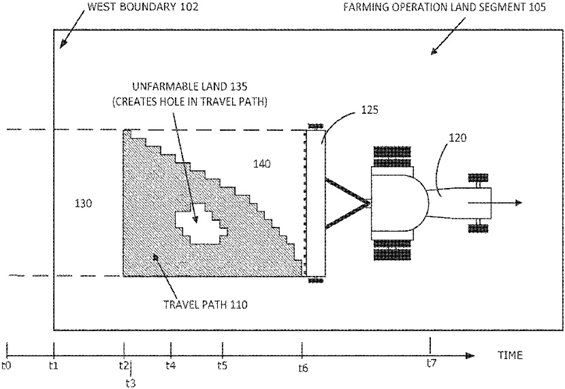
AGI SureTrack, LLC held five patents claiming variations of a “relay device” that clips onto a tractor’s data bus, reads messages from farm equipment in real time, cross-references stored “implement profiles” to decode manufacturer-specific protocols, pairs that data with GPS coordinates, and ultimately logs the completed farming operation to an electronic farm record. AGI sued precision-agriculture software provider Farmers Edge in Nebraska federal court, alleging infringement of all five patents.
The district court granted summary judgment for Farmers Edge in April 2024, ruling that every asserted claim was directed to patent-ineligible subject matter. The court declined, however, to find the case “exceptional,” which would have opened the door to an award of attorney’s fees under 35 U.S.C. § 285. Both AGI and Farmers Edge appealed.
Applying the familiar two-step Alice framework, the Court had little difficulty upholding the district court at step one. The court noted that the patent specification itself described the invention as “a computer-implemented method for gathering and processing farming data,” essentially conceding that the claims recite an abstract idea. AGI’s attempt to reframe the claims as solving an “interoperability problem” between incompatible farm-equipment communication protocols was unpersuasive with the panel, which observed that the word “interoperability” appears nowhere in the claim language.
In particular, the Court noted that the claimed “implement profiles” stored in memory were simply one dataset used to interpret another dataset, invoking RecogniCorp’s holding that encoding and decoding information is itself an abstract idea. In this context, limiting an abstract idea to the agricultural domain does not make it patentable. At step two, the Court found no inventive concept. The hardware components (i.e., microprocessor, GPS receiver, bus connector, memory) were merely generic, off-the-shelf parts used in a conventional manner, and the automation AGI highlighted merely speeds up a data-collection process. Faster execution of an abstract idea, the Court reiterated, is not an inventive concept.
Farmers Edge’s cross-appeal proved to be less conventional. After successfully defending against AGI’s infringement claims, Farmers Edge argued the litigation qualified as “exceptional,” pointing to alleged inequitable conduct during patent prosecution, misleading statements about claim abandonments, improper litigation tactics, and violations of the court’s protective orders. The alleged protective-order violations alone are the type of misconduct that weighs heavily in exceptionality determinations. These serious allegations, if proven, could shift potentially significant legal fees. Nonetheless, the district court denied the fees request in a single conclusory sentence, without explaining why none of these grounds sufficed. On appeal, the Court noted that “nothing in the district court’s terse no exceptionality ruling or the record on appeal which would permit us to appropriately review whether the court abused its discretion.”
AGI had further argued that Farmers Edge had forfeited its fees claim by not filing a motion within 14 days of the original judgment under FRCP 54(d)(2)(B). The Court rejected that argument, noting that the Advisory Committee Notes make clear a new 14-day clock begins upon entry of a new judgment following remand, thereby rendering any forfeiture argument premature. With no reasoning that would allow meaningful appellate review, the Court sent the issue back to the district court for further consideration.
The case now returns to the District Court to give both sides an opportunity to brief the exceptionality question and to give the Court an opportunity to issue a reasoned ruling. If the court finds the case exceptional, Farmers Edge could recoup, from AGI, its legal fees incurred while defending this multi-patent infringement suit. Even if the defendant is not awarded its legal fees, the patent owner’s legal fees for this lost case will be further increased by this ruling.
The decision is a straightforward restatement of existing doctrine on data collection claims, even in specialized industries. It also serves as a reminder that district courts cannot silently deny attorney’s fees after complex, hard-fought litigation, especially where a prevailing defendant has raised nontrivial allegations of misconduct. And it is a warning to patent owners that enforcement of patent rights, if not handled appropriately, risks monetary liability for the litigation in addition to invalidation of the asserted patents.